Introduction
EthCC[9] returned to Cannes from March 30 to April 2, 2026, bringing the Ethereum ecosystem back to the French Riviera. By now, a consensus has formed: Cannes has become the benchmark location for crypto conferences.
Perfect spring weather, a compact and highly walkable city, and the Palais des Festivals operating smoothly in its second year as host made logistics seamless. Nine editions in, the organization was clearly polished.
Pre event coverage suggested a large gathering, with 10,000+ attendees expected, over 400 speakers, and roughly 6,500 registered participants. Yet many longtime participants described the atmosphere as noticeably smaller and quieter compared to EthCC[8].
The change was not necessarily negative. As Shiv noted in his recap, “bear markets bring out solid builders.” The people who showed up meant it.
Despite the lighter attendance, many familiar faces and OG builders remained present across events, reinforcing the resilience of Ethereum’s core community.
Another consistent observation was the visible presence of the Ethereum Foundation team, which appeared across many events and remained actively engaged with developers and projects throughout the week. For many attendees, this level of engagement sent a strong signal for the broader ecosystem.
TL;DR — EthCC[9] Cannes
• EthCC[9] felt smaller than previous editions but highly builder focused, with many familiar faces and OG contributors still active.
• The most valuable conversations and deal making happened at side events, curated meetups and private gatherings, rather than on the main stage.
• Key narratives across the conference included AI, RWAs, stablecoins, tokenization, payments infrastructure, and privacy/ZK technologies.
• Institutional presence was noticeably stronger, highlighted by events like The Agora, where TradFi players discussed operating financial infrastructure on Ethereum.
• At the same time, the ecosystem is operating in a tighter environment, with shorter runways & leaner teams
• Overall, the conference reflected a shift away from hype cycles toward long term infrastructure, real use cases and deeper integration between crypto and traditional finance.
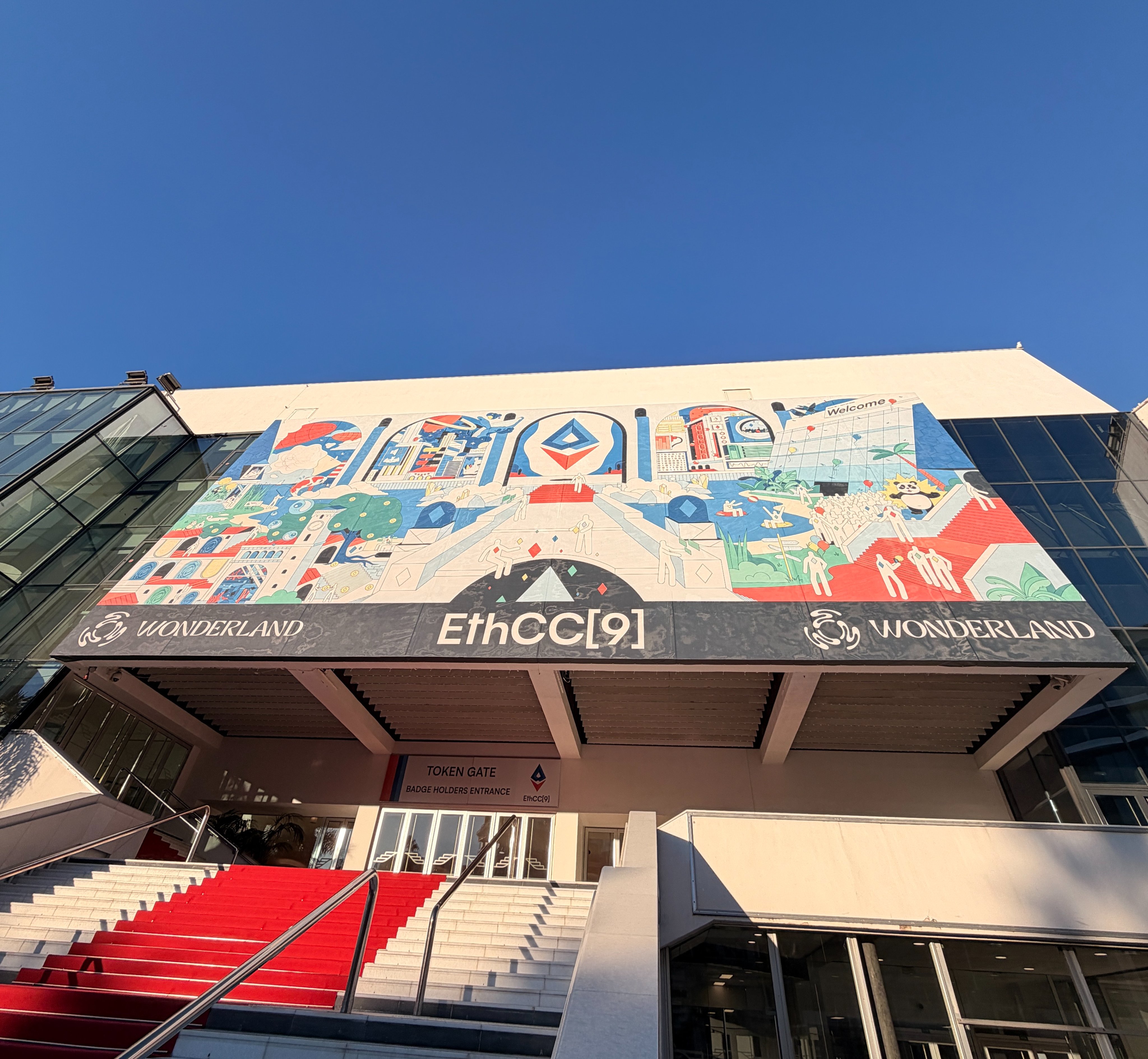
Source: EthCC
Side Events > Keynotes
One of the most noticeable structural shifts during EthCC[9] was the growing importance of side events and smaller gatherings.
While the main conference program remained active, much of the meaningful interaction happened away from the stage. Several attendees openly acknowledged that few participants attended primarily for the keynotes. Instead, the real value came from curated meetups, smaller dinners and informal discussions.
Marc Zeller captured this sentiment directly in his recap, writing that “hardly anyone cares about the talks anymore.” He even suggested that future editions introduce an “agent track”, allowing speakers to publish recorded presentations and transcripts instead of relying solely on stage talks.
The large treasury funded parties typical of bull market years were largely absent. Instead, gatherings took place in smaller venues such as villas, terraces and curated meetups hosted by projects that continue building through the cycle.
One standout event was Infinite Games: EthCC[9] Cannes Edition, hosted by GCRx in partnership with Eikyo Ventures, Amazon Web Services (AWS), and DeFi Founders Club (DFC). The gathering brought together founders, investors and operators from across the ecosystem in a curated setting.
Other notable gatherings included the Lo Tech rooftop brunch, Hack Seasons Conference, RWA and vault focused summits, and The Agora, which became the first official institutional satellite event in EthCC history.

DeFi Is Alive, But Facing Challenges
Despite the strong builder presence, EthCC[9] also revealed a candid picture of the current DeFi landscape.
Builders increasingly focused on sectors that are already demonstrating traction:
Stablecoin based financial products
Core DeFi protocols
Tokenization and RWAs
Payments infrastructure
Yield generating financial primitives
Security companies were also highly visible throughout the week, reflecting the continued importance of risk management across the ecosystem.
At the same time, traditional finance participation has grown significantly.
Companies such as Circle, Arc and Ripple attracted some of the largest crowds of the week, highlighting the increasing overlap between crypto native builders and institutional infrastructure providers.
Conferences are entering a more professional era, with growing institutional participation and more serious discussions around long term infrastructure.
Yet the broader mood remained candid.
Runways are tightening across the industry. Layoffs continue, and many projects are quietly operating with limited funding while attempting to maintain momentum.
Marc Zeller summarized the shift bluntly: the “naive era of tokens without substance is dying.”
While uncomfortable, many participants see this transition as a necessary step toward a healthier ecosystem.
Institutional Era Officially Begins
Perhaps the most structurally important development of EthCC[9] was the launch of The Agora, an institutional satellite event organized by Kaiko.
For the first time in EthCC history, major financial institutions participated in a structured institutional track, bringing together companies such as:
Bloomberg
S&P Global
BNP Paribas
Euroclear
Amundi
SG Forge
Tradeweb
Panels focused on topics including RWA tokenization, stablecoins as financial rails, private credit markets onchain, MiCA compliance, and institutional settlement infrastructure.
This was not a case of bankers exploring crypto.
It was financial institutions discussing how to operate parts of their business directly on Ethereum infrastructure.
The narrative has flipped from “what are we building” to “who is using it, how, and under what regulatory framework,” and Europe, supported by the MiCA regulatory framework, appears to be leading this transition.
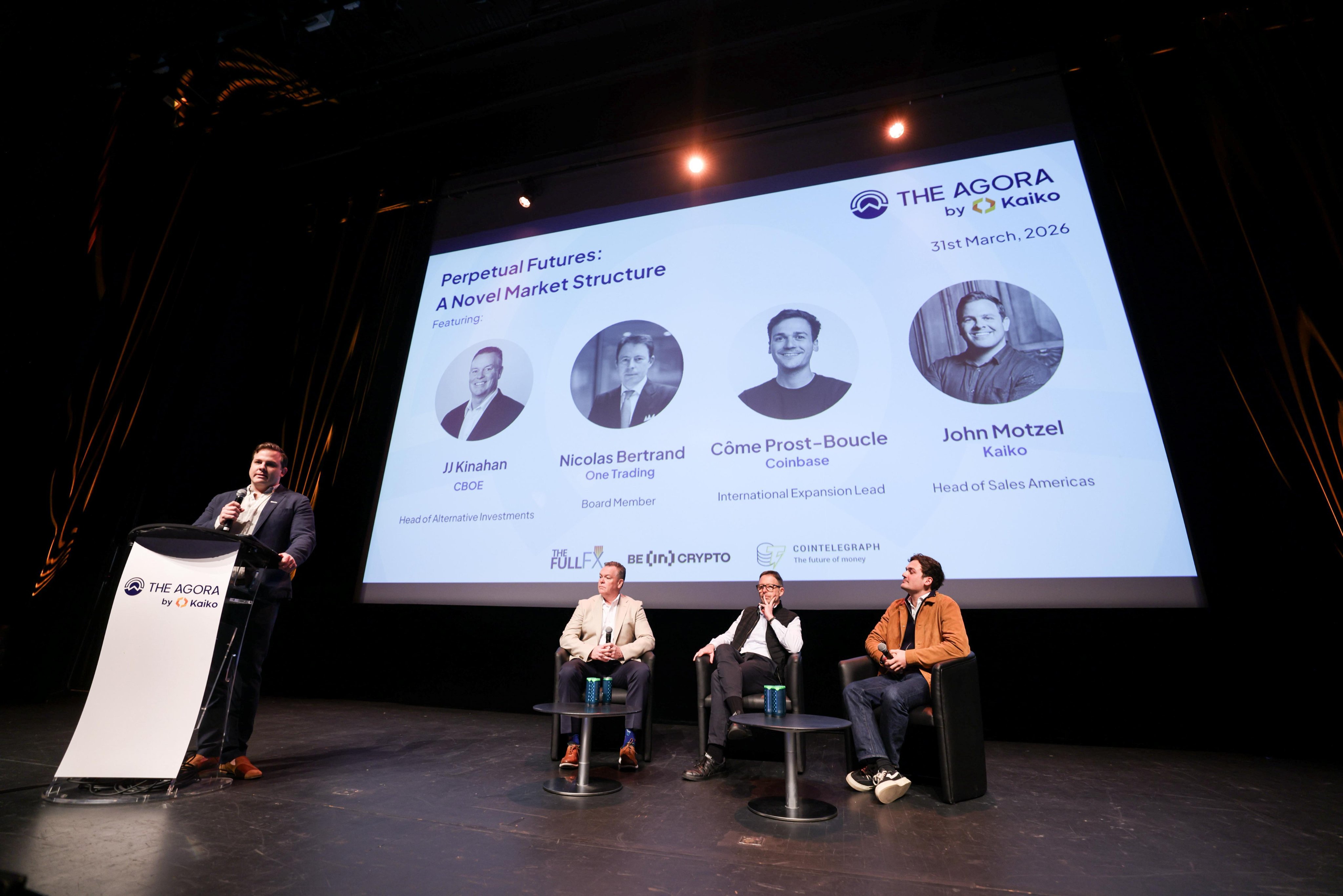
Source: The Agora
Ethereum Economic Zone (EEZ): Fixing L2 Fragmentation
One of the week’s biggest announcements came on March 29–30 with the launch of the Ethereum Economic Zone (EEZ).
Unveiled by Gnosis co founder Friederike Ernst and Zisk founder Jordi Baylina, and supported by the Ethereum Foundation, the initiative aims to address one of Ethereum’s biggest structural challenges: Layer 2 fragmentation.
Ethereum currently hosts more than 55 Layer 2 networks containing roughly $40–42 billion in liquidity, yet these ecosystems often operate in isolated silos.
The EEZ introduces a rollup framework designed to restore composability across networks.
Using real time proofs and zero knowledge technology, connected rollups will be able to interact with smart contracts across networks as if they existed on a single chain.
In practice this means:
one transaction
no bridges
unified liquidity
ETH as the gas and settlement layer
Early participants include protocols such as Aave, which is already developing a Hub and Spoke architecture in its upcoming V4 upgrade.
As Mr Technocoins summarized, the shift could allow “L2s finally cooking with shared liquidity and real composability.”
The Elephant(s) in the Room
Artificial intelligence dominated conversations across the conference.
It was nearly impossible to walk ten feet without hearing discussions about AI agents, infrastructure and automation.
Investors who once allocated exclusively to Web3 are increasingly diversifying into AI, robotics, biotech and space technologies, reflecting a broader convergence across frontier technologies.
Within crypto itself, AI was frequently discussed as a tool for building and accelerating development, with builders highlighting tools like Claude Code and other AI assistants that help write, review and ship code faster.
While this significantly speeds up product development and iteration cycles, several builders also acknowledged the trade offs: increased automation is contributing to a tighter job market for developers and may introduce new security risks if AI generated code is deployed without proper oversight.
Privacy technologies also received significant attention. Zero knowledge infrastructure and post quantum readiness were widely discussed, particularly in the later sessions of the conference.
The topic gained additional relevance after Google Quantum AI released a whitepaper warning that cracking 256 bit elliptic curve cryptography, widely used in crypto wallets, may require far fewer quantum resources than previously estimated. This growing awareness around future cryptographic risks may also explain the noticeable presence of security teams and infrastructure providers across the conference.
Cypherpunk focused gatherings captured a counter narrative as well: nostalgia for earlier DeFi eras, frustration with corporate capture, yet real excitement around ZK applications and privacy preserving financial infrastructure.
Closing the Loop: From Skepticism to Infrastructure
The conference’s closing keynote by Jérôme de Tychey captured the broader shift underway:
“Blockchain is moving from skepticism to infrastructure. Not in 10 years. Now.”
EthCC[9] reflected this transition clearly. The chaotic energy of peak bull run conferences may have faded, but it has been replaced with something more durable: less short-term hype, more suits, real use cases, and long-term conviction.
The week felt smaller, tighter and more curated, with less hype and more realism, yet the conversations were deeper and more grounded in practical applications.
At the same time, Europe still feels like DeFi’s spiritual home. The builder culture remains strong, supported by a growing regulatory framework such as MiCA and a community that continues to prioritize long-term infrastructure over short-term speculation.
Looking Ahead
EthCC[9] skipped the chaotic mania of peak bull run conferences and instead delivered something rarer: a clear and honest reflection of where the industry stands today.
DeFi remains alive, though evolving under pressure. The next phase will likely emerge from builders focusing on stablecoins, RWAs, agent driven infrastructure, privacy technology and systems that deliver real utility.
And outside the conference halls, one thing remains constant.
A sunset walk along the Cannes beach still hits differently.
The community will return for EthCC[10] in April 2027, which is already being promoted as the conference’s tenth anniversary edition.
If this year proved anything, it is that the Ethereum ecosystem may mature, consolidate and evolve — but its core builders are not going anywhere.